
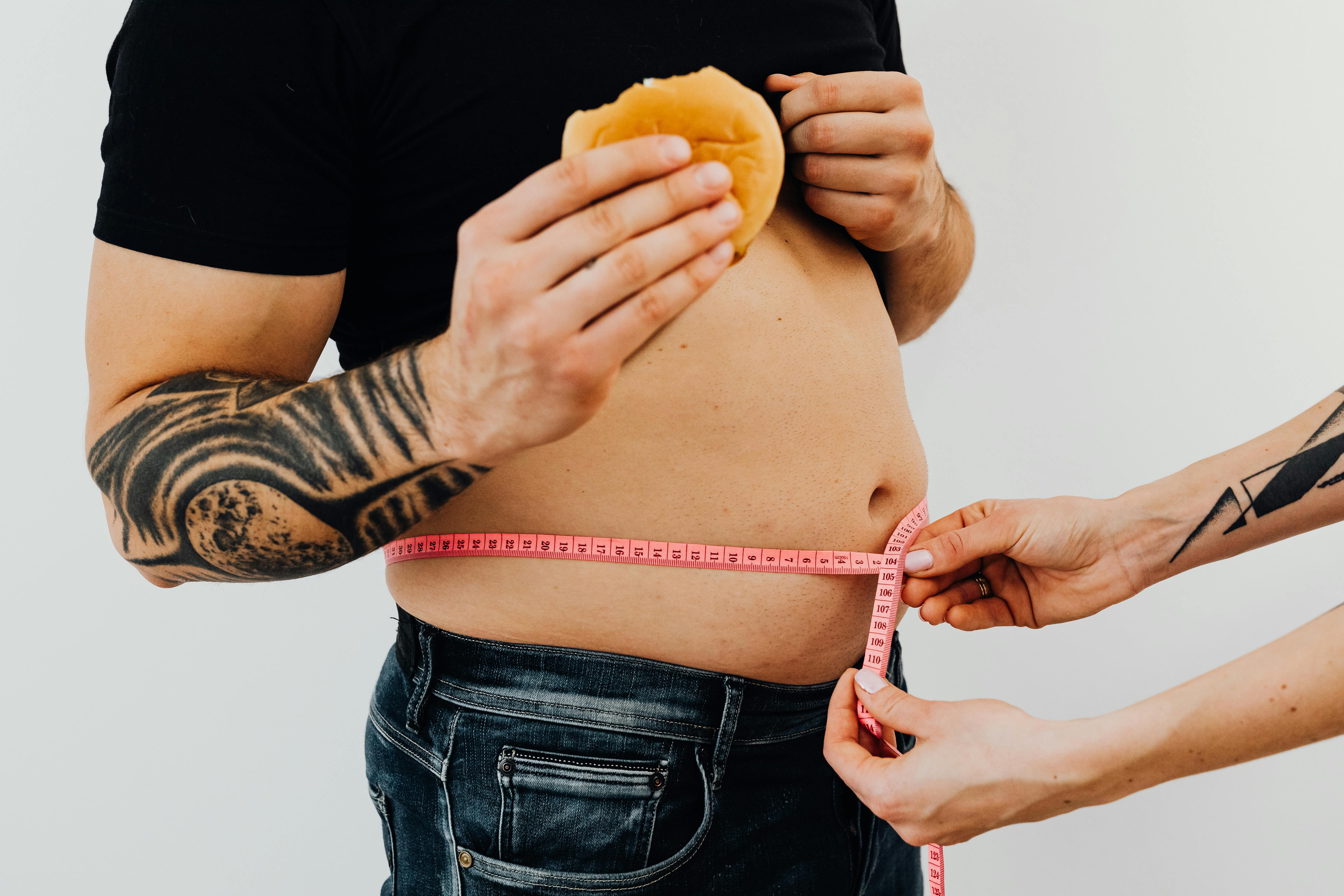
Two people of the same height and weight can carry substantially different levels of metabolic risk. The difference lies in where fat is stored, and a tape measure detects it more effectively than a scale.
Fat depots are not interchangeable tissue
Subcutaneous fat sits directly beneath the skin and functions largely as a storage depot with limited metabolic activity.
Visceral fat surrounds the abdominal organs and behaves quite differently, releasing fatty acids and signalling molecules at higher rates.
Because these two depots differ in function, the same total quantity of fat carries different consequences depending on its distribution.
Visceral fat drains directly to the liver
Blood leaving the visceral depot travels through the portal vein into the liver before reaching general circulation.
The liver therefore receives fatty acids and inflammatory signals from this tissue at concentrations far higher than the rest of the body sees.
This exposure affects how the liver handles glucose and produces lipoproteins, which is the proposed route linking abdominal fat to metabolic changes.
The depot is metabolically active
Fat tissue secretes signalling molecules, and the visceral depot produces a different profile from the subcutaneous one, weighted towards inflammatory signals.
It is also more responsive to stress hormones, which is part of the explanation for observed associations between chronic stress and abdominal fat distribution.
Its cells release stored fat more readily as well, which is why abdominal fat generally responds earlier than other depots to sustained changes.
That responsiveness cuts both ways, since the depot also fills quickly during periods of surplus rather than accumulating gradually alongside the rest.
Distribution is influenced by factors outside behaviour
Sex hormones shape where fat is preferentially stored, which is why the typical pattern differs between men and women and shifts around menopause.
Genetic variation accounts for a substantial part of the remaining difference, independent of total fat mass.
Age shifts distribution towards the abdomen even where total weight is unchanged, which is why a stable scale reading can conceal a real change.
None of these factors are chosen, which is one reason distribution is treated as a risk marker to be measured rather than as evidence about a person's habits.
Why the measurement is used clinically
Imaging can quantify visceral fat directly but is expensive, so waist circumference and waist-to-height ratio serve as practical proxies.
They add predictive information to body mass index in population studies, which is why current guidance recommends recording both.
Measurement technique affects the result considerably, so a value obtained inconsistently is of limited use, and interpretation belongs with a clinician.