
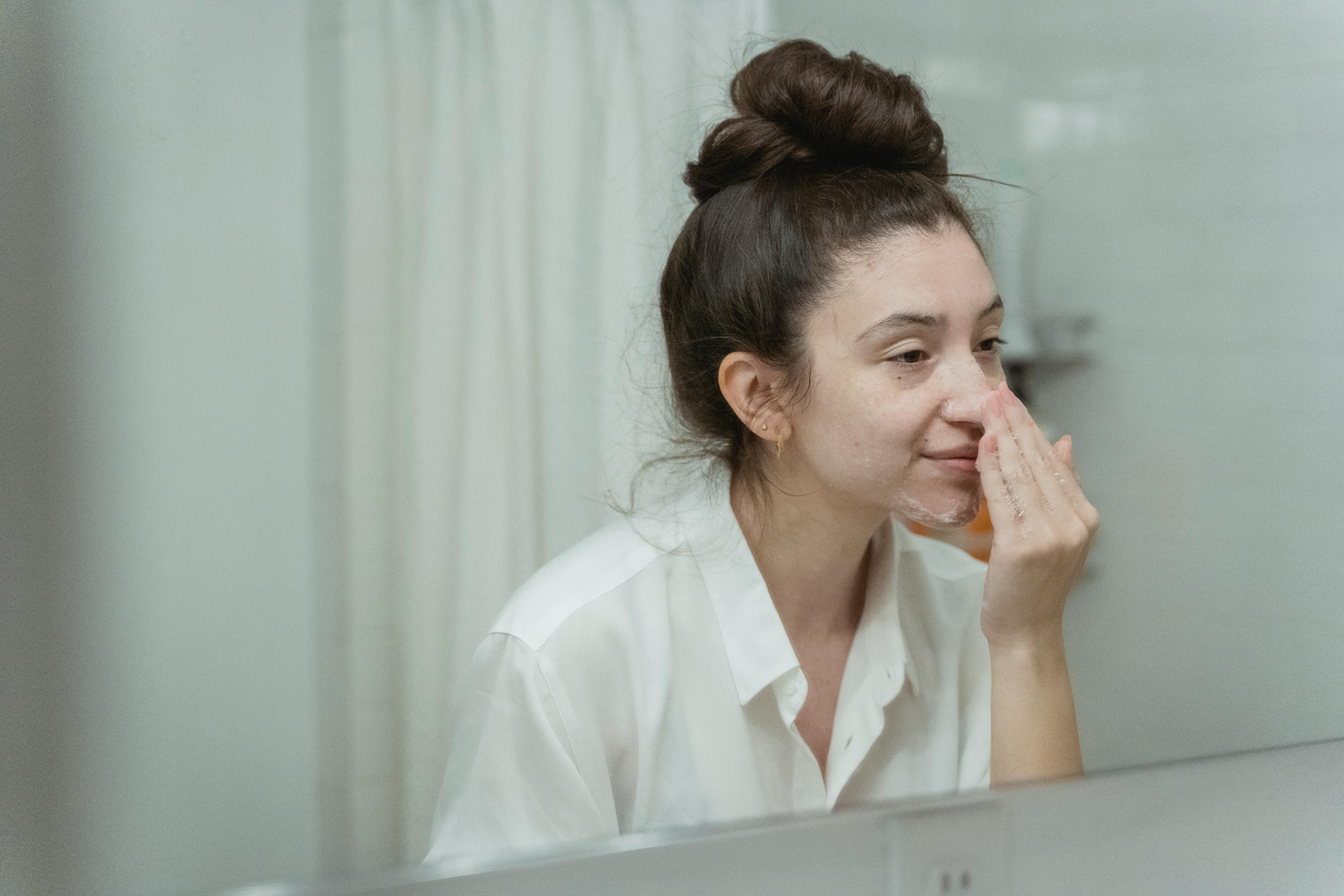
Products that hydrate the surface produce a visible change within minutes. Ingredients that alter skin structure take considerably longer, and the delay is a consequence of how skin renews itself.
Skin replaces itself on a fixed schedule
New cells are produced at the base of the epidermis and migrate upwards, flattening and filling with keratin as they go, before being shed from the surface.
The full journey takes several weeks in a healthy adult, and it lengthens with age as the rate of cell production slows.
An ingredient acting on cell production is therefore acting on cells that will not reach the surface for a month or more.
The visible surface is already finished
The outermost layer consists of dead cells whose properties were determined while they were still alive in the deeper layers.
Nothing applied topically can alter what those cells became, which is why immediate changes in appearance come from hydration and light reflection rather than structure.
Genuine structural change becomes visible only as the treated cohort of cells replaces the untreated one, which sets the minimum timescale.
Collagen changes take longer still
Ingredients aimed at firmness act on the dermis below, where collagen and elastin are produced by fibroblasts.
Collagen turnover in adult skin is slow, measured in months rather than weeks, so changes at this level appear later than surface changes.
This is why studies of such ingredients typically run for several months, and why shorter trials tend to show effects that are largely hydration.
Irritation often precedes improvement
Ingredients that accelerate cell turnover initially expose less mature cells at the surface, which produces dryness, flaking and sensitivity.
This phase reflects the barrier being temporarily less complete, and it typically settles as production adjusts to the new rate.
Interpreting the irritation as a reaction and stopping is common, which means the ingredient is frequently discontinued before its actual effect could appear.
Why changing products frequently prevents assessment
Judging whether something works requires leaving it in place for longer than the renewal cycle, with nothing else changing alongside it.
Introducing several products at once makes attribution impossible, and skin appearance fluctuates with sleep, season and hormonal cycles regardless.
Persistent irritation, or any reaction that spreads or blisters, is a reason to stop and seek assessment rather than to continue through an adjustment period.